

sample-post-4

Will I have enough money to retire?

The #1 question people have about their Financial Health:

Do I have enough money to retire?

There are variations of this question:

“Will I have enough money to retire?” or “Can I retire on time?”

They all lead to one glaring issue:

You’re not confident about your advisors’ process.

A Second Opinion Portfolio Review will provide you with a clear unbiased direction.

Schedule Your Second Opinion Review

Free, No Obligation

Before you consider meeting with me here are a few things to consider:

Sources of Income

There are very few employers that provide Defined Benefit Pension Plans. This means your retirement income will have to come from your own personal investments.

The dark blue on the chart below represents Pension Income. If you don’t have a Defined Benefit Pension Plan through your employer, what is your plan to replace $30,000 of annual pension income?

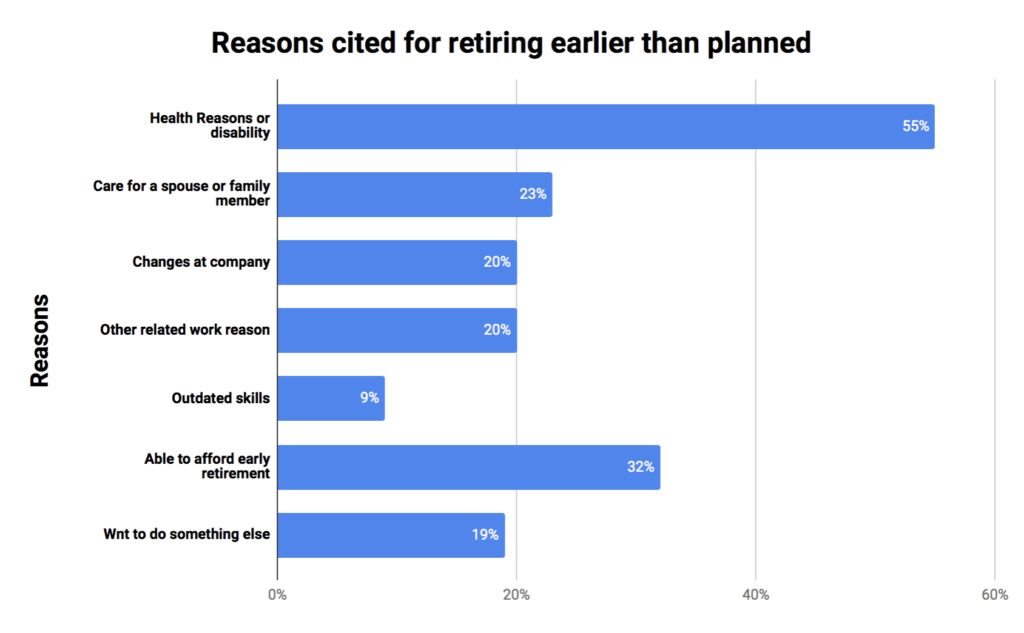
Reasons why people retired earlier than expected

We are conditioned to believe retirement starts at 65.

Statically speaking it doesn’t. More than 1/2 of the people who state they will retire at a certain age don’t.

The table below illustrates why.

Your financial plan should address these facts.
Do you want to know if you’re on track?

Estate Planning David K Aaron

Questions to ask your financial advisor

Use these questions to find the right financial advisor for your needs

Finding the right financial advisor to work with has become just as challenging as trying to pick the right investment. Not all financial advisors are created equal so you have to learn to interview them.  Here are a few questions to help you determine the right advisor to hire.

Questions about the advisor:

  •     How long have you been in business?
  •     Do you specialize in anything?
  •     What do you like most about being an advisor?
  •     What educational designations do you have?
  •     What makes you different from all the other advisors that are out there?

Questions about their business:

  •     What does your organization look like?
  •     How many clients do you have?
  •     What does your ideal client look like?

Questions about products and services

  •     What are your product biases?
  •     What kinds of products do you sell?
  •     What kinds of products can you not sell?
  •     What services do you provide?
  •     What is your area of expertise?
  •     Do you do financial/retirement plans?

Questions about investing:

  •     What is your investment philosophy?
  •     What do you do for investment research?
  •     How do you choose investments to buy?
  •     When do you sell investments and why? 
  •     What is your track record?
  •     Do you have an example of a model portfolio?
  •     How do you measure or judge performance?
  •     Do you use performance benchmarks?
  •     How do you measure risk?
  •     How do you define risk?
  •     What measures do you use to evaluate risk?
  •     What is your position on taxation of investments?
  •     Will I have an investment plan?
  •     What will that plan entail?
  •     What is the process I will have to go through?
  •     Do you use investment policy statements?

Questions about compensation and service:

  •     How do you get paid?
  •     What fees do you charge?
  •     What total fees will I have to pay directly or indirectly?
  •     How often will you report back to me?
  •     What is your preferred method of communication?
  •     What is your service proposition?
  •     How often will my portfolio be reviewed?
  •     Do you have client references?
  •     Ask them to explain a concept to you?
  •     When is the best time to invest?
  •     What is the best way to save money on tax?
  •     Can you explain the difference between RRSPs and TFSAs?

Developing an interview process:
There are a lot of questions here and you may not want to ask all of them or it may be a half-day meeting.  Pick some questions that are important to you and type them out in a format where you can take notes.  Take this document into the interview and let the advisor know you have some questions and take notes as the advisor answers them.  As soon as you are done the meeting, take a moment in private to rate how the advisor did with each of the questions.  I like to use a scale of 1 to 10.  It’s important to do this right away when you get to your car because everything will still be fresh in your head.

Here are the three most important questions of all:

  •     Can you see yourself developing a long term relationship with this advisor?
  •     Do you trust this advisor?
  •     Can this advisor fulfill your financial needs over the next 5 to 10 years?