

Female Business Owner

How to improve your credit score

Use these strategies to build up your credit and gain the trust of lenders

Your personal and business credit scores are important factors a banker will consider when you apply for a business loan.

While your business’s financial strength is important, a bank will also look at your personal credit score when deciding whether or not to give you a loan.

If you think your personal credit score could be a problem in obtaining a business loan, don’t despair. There are strategies you can use to improve your credit rating.

1. Pay your bills on time

Consistently paying your bills on time isn’t only a good way to avoid interest and penalties, it’s also the best way to build your credit history, improve your credit score and show your banker you are a reliable business partner.

Your payment history is the most important aspect of your credit score. Even a slight delay in your bill payment could have an impact.

2. Have the right credit mix

The credit rating bureaus look at what types of debt you have when determining your credit score. Having too many credit cards, for example, could negatively affect your score, especially if you are using one card to repay money you’ve borrowed on another.

Similarly, opening multiple credit accounts at the same time will have an impact on your credit score. The same goes for making too many credit inquiries with the credit bureaus.

To avoid negatively affecting your credit rating, make sure you only apply for the credit you need and believe you will be approved for. And don’t apply for multiple credit products at the same time.

3. Keep your credit utilization rate low

The amount of credit you use is considered a predictor of default risk and will have a direct impact on your credit score. In general, the rule on credit usage is that a low utilization is better. Less than 10% is preferred.

In general, the rule on credit usage is that a low utilization is better. Less than 10% is preferred. Always pay back credit cards and unsecured lines of credit as soon as possible.

4. Separate your business credit from your personal credit

Your business credit score is separate from your personal score and includes reports from firms that do business with your company, such as suppliers and financial institutions.

You should separate your business credit from your personal credit as much as possible. Use business loans, your business line of credit and business credit cards to finance investments, purchase supplies and top up working capital.

5. Check your credit report regularly

Credit reports aren’t perfect. Names may be misspelled, other people’s information can end up on your file and debt that you’ve paid can still be listed.

It is good practice to check your credit report regularly. This will ensure the report is up to date, that all the information is correct and that you have not been the victim of fraud.

Your personal credit report can be easily obtained from either of two service providers in Canada—Equifax Canada or TransUnion. Visit their websites to learn how. For your business’s credit bureau report, there are three options—Equifax CanadaTransUnion and Dun & Bradstreet. Because agencies don’t share information, it’s a good idea to review your credit history from all the credit agencies.

6. Avoid debt collection and bankruptcy

Leaving bills unpaid to the point where your debt is referred to collection agencies, your assets are seized or you have to file for bankruptcy will obviously hurt your credit score.

Always avoid getting into a situation where a creditor will go after your assets publicly. Collection and bankruptcy are very negative for your credit score. Avoiding that would be critical for having good creditworthiness.

7. Be patient

It’s difficult to estimate how long it can take before someone’s credit improves significantly. He advises entrepreneurs to start building their credit history early on.

Start with personal and business credit cards and keep utilization low. That will generate the type of history that will be good for both your personal and business credit scores.”
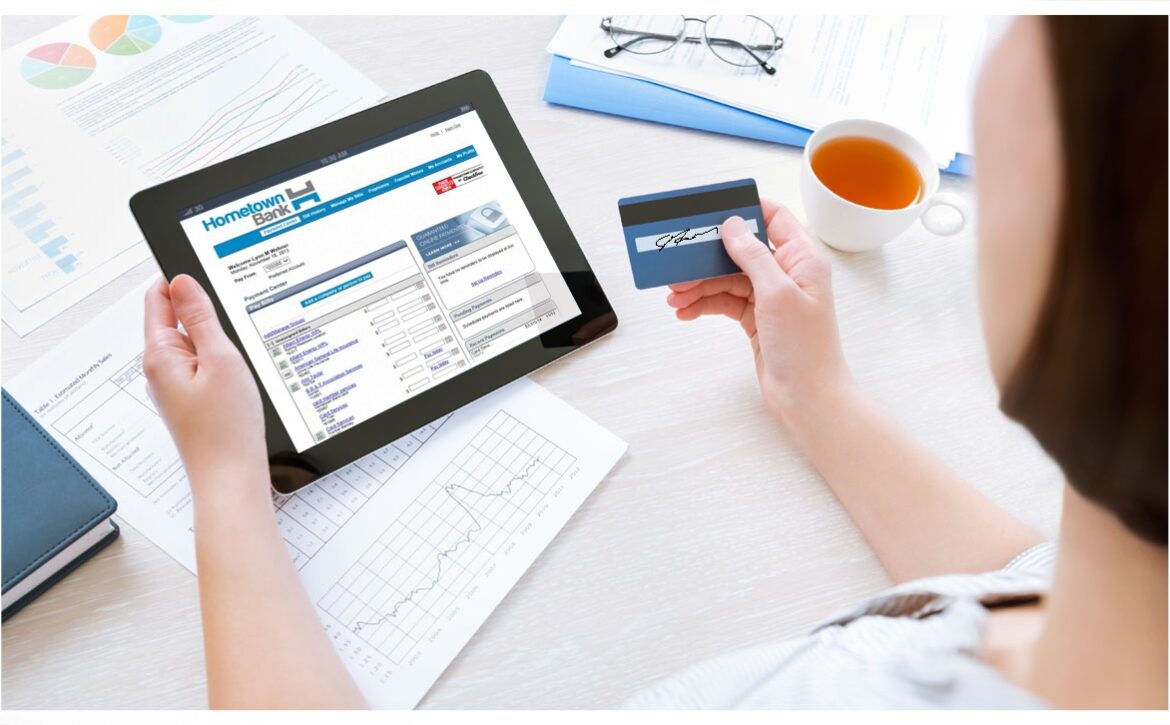
Paying Bills Early

Discounts for paying your bills early

When does it make (cents) to pay early?

Businesses often offer discounts to customers who pay their bills early. Does it make financial sense to take advantage of these discounts?

The answer is usually yes. They can actually be very lucrative for your business and justify using your extra cash or borrowing to take advantage of them.

But they’re not good for all businesses. Whether they are a good idea for your company depends on a few factors, such as your return on investment, financing costs and cash flow.

Here’s how to figure out whether it’s worth taking a discount for early payment—and whether it makes sense for you to offer one to your own customers.

37% annualized return

Let’s say your supplier offers a 2% discount for paying an invoice in 10 days. Otherwise, the full amount is due in 30 days. This common discount is known as 2/10 net 30.

If you pay in 10 days, it means you’re giving up the use of your money for 20 days in exchange for 2% off. A 2% return over 20 days turns out to be pretty impressive. It works out to a 37% return when annualized.

Even a 1%/10 net 30 discount works out to an 18% return when annualized.

Right for your business?

But the discounts aren’t always worth taking. You have to weigh them against your return on investment, cost of financing and cash flow.

If you earn less than 37% from an investment in your business or pay less to service your debt, you’re best off taking a 2%/10 net 30 discount.

But if your investment return is above 37% (which can be the case especially for some start-ups), then taking the discount doesn’t make financial sense. You could earn more putting the money to work in your business.

Similarly, in the unlikely event that your cost of financing is above 37%, taking the discount isn’t a good idea. You’re better off paying down your debt.

Cash flow is another important consideration. If cash on hand is tight, you should take a pass, even if your financing cost or investment return is above 37%.

When to offer a discount

What about offering early-payment discounts to your own customers? The math works in reverse and that means offering them is very costly.

Your own return on investment or financing cost would have to be above 37% for it to make sense to offer a 2%/10 net 30 discount on an invoice. It would have to be above 18% for it to make sense to offer a 1%/10 net 30 discount.

Thus, unless your business is experiencing cash flow problems or the return on investment of the business is very high, it’s probably not a good idea to offer a discount for early payment.

Probably not worth it

If your customer is paying you within 30 days, it most likely doesn’t make sense from a financial point of view. If you decide to stop giving discounts, it might encourage your customers to start paying late.

Financial Dashboard

Financial dashboards

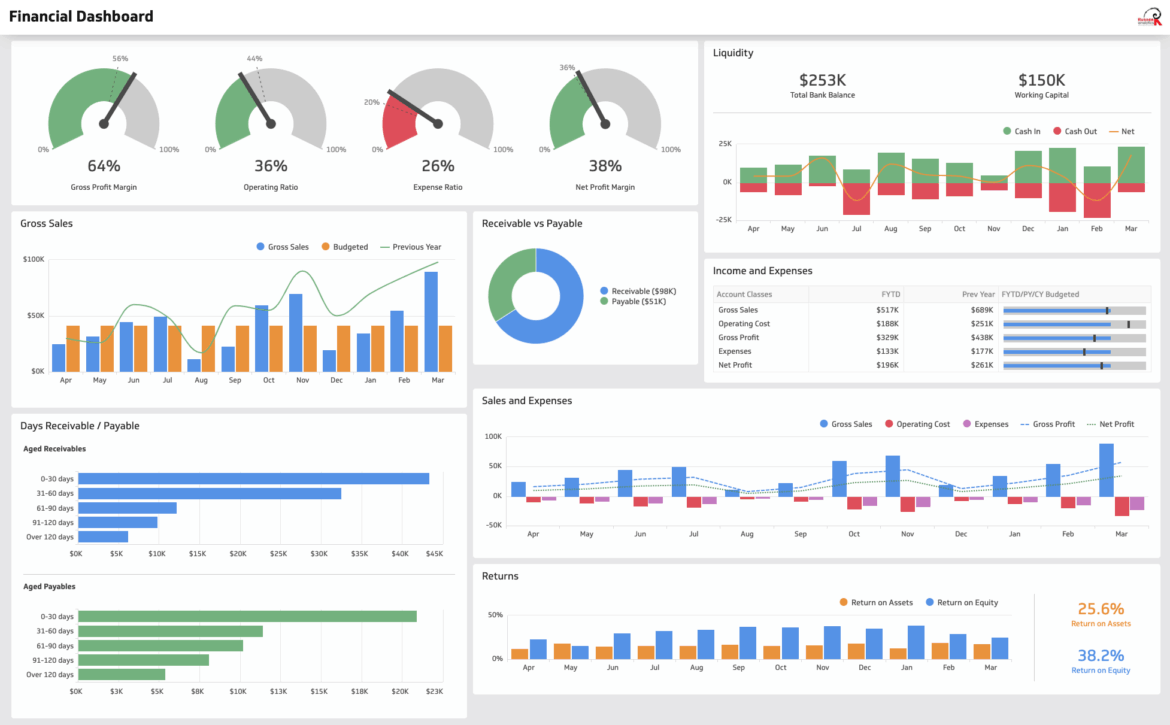
Find out how your business is doing and quickly reveal variations that might require corrective action with these important indicators.

Monitoring your cash flow is one of the best ways to improve the financial health of your business. It could mean the difference between going through some financial bumps and having to close your business.

Creating a spreadsheet and updating it regularly will provide you with the data you need to create your financial dashboard—a group of indicators used regularly to monitor your company over time that will tell you how you’re doing and quickly reveal variations that might require corrective action. (Accounting software often offers a dashboard as part of its cash flow management tools.)

For better overall cash flow analysis, always start by making financial projections that reflect expected monthly inflows and outflows, including major anticipated purchases and financing. Then, use your spreadsheet to compare your projections to actual results.

Cash flow indicators typically found on a dashboard include:

  • Actual sales and sales in your pipeline
  • Average days collection (for your accounts receivable) and average days payable outstanding (to your suppliers)
  • Inventory outstanding

Other indicators will depend on what type of business you are running.

Here are three important metrics you might want to consider also including on your cash flow dashboard.

1. Cash on hand

Some businesses monitor this number on a daily basis. If cash on hand falls below your target, alarm bells should go off and contingency measures taken.

Continuously monitor how much cash you have on hand and check it against the target set when you did your financial projections. Your quick ratio and your working capital ratio will tell you if you have enough cash on hand to meet short term needs.

2. Cash conversion cycle

Tracking this metric over time will help you identify sources of cash flow problems and measure progress in tightening your cash flow management. The lower this number, the better—it means you have more cash on hand to generate additional returns and/or reduce your line of credit.

To determine your cash conversion cycle take the number of days of inventory outstanding (how long it takes on average to sell your inventory), then add to it the number of days receivable outstanding (how long it takes your customers to pay you), then subtract the number of days payable outstanding (how long it takes you to pay your bills).

Formula

Cash conversion cycle =

Days inventory outstanding + Days receivable outstanding Days payable outstanding

3. Gross profit

Gross profit is a great starting point for determining the value of every sale and making pricing and promotion decisions.

It’s important to keep an eye on it since a gradual decline could mean future trouble for your business.

Your gross profit (or gross margin) is the money you make directly from selling products and services, minus the cost of sales. It doesn’t include indirect cost of sales such as rent and marketing.

You can calculate your gross profit as a percentage of revenues using the following formula:

Formula

Gross profit margin = Gross profit / Revenues X 100

Cashflow

5 steps to plan your cash flow in 2020

Financial projections will help you anticipate your cash flow needs

It’s the start of a new year, and you’ve got big plans for your company—an expansion or a major equipment purchase.

How will your plans affect your cash flow? Will you need financing, and if so how much?

These are typical questions to ask as part of your company’s annual financial planning.

Many neglect financial projections

But a surprising number of entrepreneurs fail to make financial projections for their company. And the result can be serious, unexpected trouble.

Making cash flow and other financial projections each year is a vital tool for keeping your business healthy and on a sustainable growth path.

The idea is to have a reference you can review through the year, so you can make adjustments as needed. Without this, you’re basically leaving everything up to chance.

How to make financial projections

Here are five steps to creating and using financial projections to guide your business.

1. Plan your year

First, think about what you want to accomplish over the next 12 months. This should be based on your strategic plan for your business.

With a clear idea of what you want to achieve, start estimating your annual expenses and consider the additional costs you will incur to implement your business strategy. These expenses should be added to the costs of running your day-to-day business, such as:

  • payroll
  • rent
  • utilities
  • interest
  • loan repayments

Also, be sure to consider anticipated big-ticket items, such as buying a new truck, redesigning your website or updating your computers.

Next, estimate your annual sales and think about the effect your decisions will have on your cash flow forecast. Make sure you take into consideration your credit policy and when your customers pay to ensure your business has enough cash throughout its business year.

2. Make projections

Based on past experience and your plans for the coming year, prepare these three documents.

  • A projected income (profit-loss) statement—Projected revenues, costs, expenses, taxes, etc.
  • A projected balance sheet—Assets, liabilities, equity.
  • Monthly cash-flow projections—Accounts receivable, accounts payable, investments, financing, etc.

It’s helpful to have different projected scenarios (optimistic, most likely and pessimistic) so that you can anticipate better the impact of each one.

3. Arrange financing

With your projections in hand, determine financing needs for the coming year and discuss them with your bankers and other financial partners.

The start of the year is a good time to arrange any needed credit lines or business loans. Working out your financing ahead of time improves your odds of getting approval and helps ensure the best terms.

If you come to your banker and tell them you need a $2 million loan next week, most probably he or she won’t be able to help you. Bankers don’t like surprises. They lend you money when you can show you understand what you’re doing.

Also, don’t make the common mistake of dipping into your working capital for long-term capital investments because you may end up facing a cash crunch. It’s better to use long-term financing for such projects.

4. Monitor and adjust

Finally, review your projections each month against the actual numbers to see if you’re on track. Variances can flag trouble spots in your business. Take an even closer look each quarter. Make any needed adjustments to your operations or changes in your planning.

5. Get help

Depending on your in-house resources, consider seeking outside help in creating your financial projections and monitoring your progress through the year.